
This article explores the principles and applications of environmental design thinking as a methodology for shaping urban environments. It examines how this approach moves beyond mere aesthetics to integrate ecological considerations, social equity, and functional performance into the fabric of cities.
Understanding Environmental Design Thinking
Environmental design thinking is a process that emphasizes a holistic approach to the creation and modification of built environments. It seeks to understand the complex interplay between human activities, natural systems, and the built form. At its core, it is about fostering a symbiotic relationship between human settlements and the Earth’s ecosystems, rather than viewing them as separate entities.
The Foundations of Environmental Design Thinking
The origins of environmental design thinking can be traced to a growing awareness of the detrimental impacts of unchecked urban development on the natural world. Early pioneers in fields such as landscape architecture, urban planning, and environmental science began to question the prevailing models of design that prioritized economic growth and technical efficiency above all else. These individuals recognized that the built environment is not a context-free zone but rather an intricate system deeply embedded within broader ecological processes. Think of it as understanding the circulatory system of a city, not just its skeleton. The goal is to create a city that breathes, adapts, and thrives in harmony with its surrounding natural environment. This involves a fundamental shift from a purely anthropocentric viewpoint to one that acknowledges the intrinsic value of ecological systems and their crucial role in supporting human well-being. Environmental design thinking thus incorporates principles from ecology, sociology, psychology, and urban studies to inform design decisions.
Key Principles and Methodologies
Several core principles underpin environmental design thinking. Sustainability is paramount, encompassing not only environmental protection but also social equity and economic viability – often referred to as the “three pillars of sustainability.” This means designs should aim to minimize resource consumption, reduce pollution, and promote long-term ecological health, while also ensuring fair access to resources and opportunities for all residents and contributing to resilient local economies. Another core principle is resilience, which involves creating urban environments that can withstand and adapt to disruptions, whether they be climate change impacts, economic downturns, or social stresses. This might include designing for flood mitigation, incorporating green infrastructure to manage stormwater, or fostering diverse economic bases. Biomimicry, the practice of drawing inspiration from natural forms, processes, and ecosystems to solve design challenges, is also a powerful methodology. For example, studying how termite mounds regulate temperature might inform the design of buildings with passive cooling systems. Participatory design is another crucial element, recognizing that effective environmental design requires the active involvement of the communities it serves. This ensures that designs are context-specific, meet the needs of the people who will use them, and foster a sense of ownership and stewardship. The process often involves extensive research, site analysis, and iterative design cycles, allowing for continuous refinement and adaptation as new information emerges or conditions change.
The Role of Technology and Innovation
Technology plays a significant role in enabling and advancing environmental design thinking. Digital modeling and simulation tools allow designers to predict the environmental performance of their designs, such as energy consumption, water use, and microclimate effects, before construction begins. Geographic Information Systems (GIS) are invaluable for mapping and analyzing urban environments, identifying ecological corridors, and understanding land use patterns. Furthermore, advances in materials science have led to the development of more sustainable building materials with lower embodied energy and improved performance characteristics. Innovations in renewable energy technologies, such as solar panels and wind turbines, are increasingly integrated into urban infrastructure. Smart city technologies, when implemented with an environmental focus, can optimize resource management, improve transportation efficiency, and enhance public services, all contributing to a more sustainable urban metabolism. However, it is important to ensure that technology serves as a tool to enhance environmental outcomes rather than becoming an end in itself, and that its adoption is equitable and does not exacerbate existing social divides.
Transforming Urban Landscapes: Applications and Case Studies
Environmental design thinking is not a theoretical construct; it is actively being applied to reshape urban environments across the globe. These applications demonstrate a shift from interventions that address isolated problems to comprehensive strategies that foster systemic change.
Green Infrastructure and Ecosystem Services
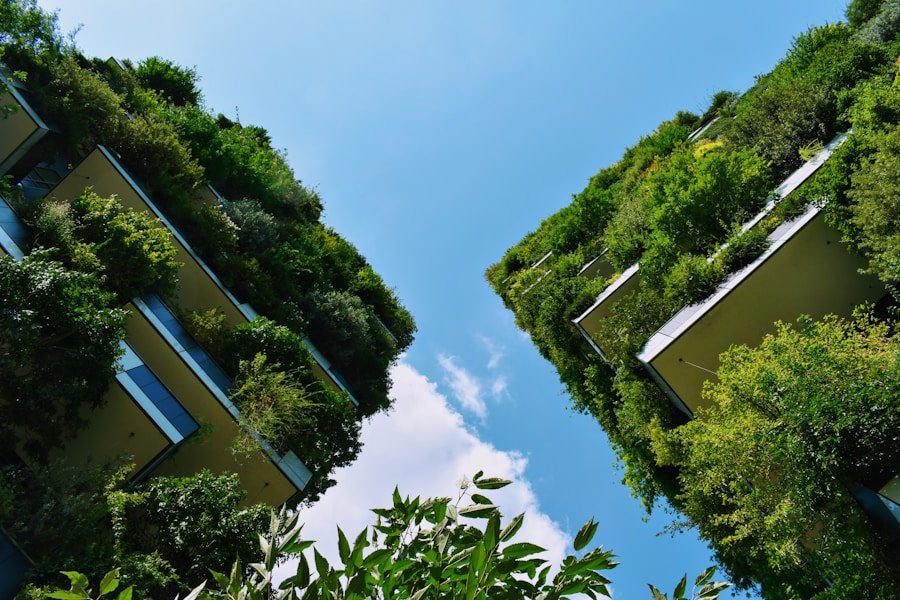
One of the most visible manifestations of environmental design thinking is the integration of green infrastructure. This refers to a strategically planned network of natural and semi-natural areas designed and managed to deliver a wide range of ecosystem services. These services are the benefits that nature provides to humans, such as clean air and water, flood control, temperature regulation, and habitat for biodiversity. For example, urban parks, green roofs, rain gardens, and permeable pavements act as living systems that absorb rainwater, reduce the urban heat island effect, improve air quality, and provide recreational spaces. These elements function as the lungs and kidneys of a city, filtering pollutants and regulating its internal climate. Consider a city without trees; it would be a harsh, overheated environment. Green infrastructure seeks to reintroduce these natural functions into the urban fabric. The implementation of these strategies often involves reimagining underutilized or degraded urban spaces, transforming them into ecological assets. This approach not only enhances environmental quality but also contributes to public health and well-being by providing opportunities for recreation and connecting residents with nature.
Sustainable Mobility and Public Realm Design
Environmental design thinking significantly influences how people move through cities and interact with public spaces. The focus shifts from prioritizing private vehicles to promoting sustainable mobility options. This includes designing for pedestrians and cyclists, investing in efficient and accessible public transportation, and creating integrated transport networks that reduce reliance on fossil fuel-powered cars. Street design itself undergoes a transformation, moving away from wide, car-centric arteries towards multi-functional environments that accommodate diverse users and incorporate green elements. Public realm design under this paradigm emphasizes creating vibrant, inclusive, and ecologically sensitive spaces. Think of a street not just as a conduit for cars, but as a space for people, for community gathering, and for nature. This might involve widening sidewalks, creating dedicated bike lanes, planting street trees, and incorporating public art and seating. The aim is to foster a sense of place, encourage social interaction, and make urban environments more enjoyable and healthier for everyone. The integration of these elements creates a more humane and livable city.
Adaptive Reuse and Circular Economy Principles
Another crucial application of environmental design thinking lies in the realm of adaptive reuse and the embrace of circular economy principles. Instead of demolishing existing structures and creating new waste, this approach seeks to repurpose and revitalize existing buildings, minimizing the environmental impact associated with construction. This can involve transforming old industrial buildings into residential lofts, former train stations into cultural centers, or underutilized office blocks into mixed-use developments. Adaptive reuse not only conserves resources and reduces embodied energy but also preserves the historical and cultural character of a city. Complementing this is the application of circular economy principles, which aim to keep resources in use for as long as possible, extract the maximum value from them whilst in use, and then recover and regenerate products and materials at the end of each service life. This could involve designing buildings for deconstruction, using recycled materials, and establishing local systems for material recovery and reuse. This perspective views buildings and urban materials not as endpoints, but as part of a continuous cycle of resources.
Resilience and Climate Change Adaptation
Environmental design thinking is increasingly being employed to address the challenges posed by climate change. This involves designing urban areas that are more resilient to extreme weather events, rising sea levels, and other climate-related impacts. Strategies include the implementation of buffer zones along coastlines, the creation of urban flood management systems that mimic natural water cycles, and the development of heat-resilient urban designs that mitigate the urban heat island effect. For instance, incorporating permeable surfaces can help absorb excess rainfall and reduce the strain on conventional drainage systems. Planting more trees and creating green spaces can lower ambient temperatures. This requires a forward-looking approach, anticipating future environmental conditions and designing accordingly. It is like building a ship that can not only navigate but also weather storms. This focus on resilience ensures the long-term viability and safety of urban communities in the face of a changing climate.
The preceding sections have laid out the theoretical underpinnings and practical applications of environmental design thinking. The following will delve into the broader implications and future directions of this transformative approach.
The Interconnectedness of Urban Systems
A fundamental tenet of environmental design thinking is the recognition that urban environments are not collections of isolated components but rather complex, interconnected systems. Understanding these interdependencies is crucial for effective and sustainable intervention.
The Urban Metabolism Model
The urban metabolism model provides a framework for understanding the flows of energy, water, materials, and waste within a city. Just as a biological organism consumes resources and produces waste, so too does a city. Environmental design thinking seeks to optimize this metabolism, making it more efficient, less wasteful, and more circular. This involves analyzing where resources are sourced, how they are used within the city’s systems (buildings, transportation, industry), and how waste is generated and managed. The goal is to move towards a more closed-loop system, minimizing the intake of virgin resources and the output of pollutants. For example, understanding how much water is used in a residential area might lead to the implementation of water-efficient fixtures and rainwater harvesting systems. Similarly, analyzing waste streams could inform the development of localized composting facilities or material recovery centers. This systems-thinking approach allows for the identification of leverage points where interventions can have the most significant positive impact.
Social Equity and Environmental Justice
Environmental design thinking inherently addresses issues of social equity and environmental justice. The benefits of an environmentally healthy and resilient city should be accessible to all residents, regardless of their socioeconomic status or background. Historically, marginalized communities have often borne a disproportionate burden of environmental degradation, such as proximity to polluting industries or lack of access to green spaces. Environmental design thinking seeks to rectify these imbalances by prioritizing equitable distribution of green infrastructure, ensuring access to clean air and water, and promoting community engagement in the design process. This means actively involving all stakeholders, especially those from underserved communities, in decision-making. A park designed without considering the needs of local residents might become underutilized or even a source of conflict. Conversely, a co-designed space can foster a sense of ownership and become a valuable community asset. This ensures that the transformation of urban landscapes benefits everyone, fostering healthier and more equitable urban environments.
The Role of Education and Awareness
The widespread adoption of environmental design thinking relies heavily on education and awareness. Raising public understanding of ecological principles and the impact of urban development on the environment is essential. Educational institutions play a critical role in training future designers, planners, and policymakers in these principles. Furthermore, public outreach programs and community workshops can empower residents to advocate for environmentally sound urban development and participate actively in shaping their neighborhoods. When people understand the interconnectedness of their environment and the choices they make, they are more likely to support and engage with sustainable initiatives. This fosters a culture of environmental stewardship within the urban context, where individuals and communities become active participants in creating a more sustainable future.
Challenges and Future Directions
While environmental design thinking offers a promising path forward for urban development, its implementation is not without its challenges. Addressing these hurdles will be crucial for realizing its full potential.
Overcoming Inertia and Resistance to Change
One of the primary challenges in adopting environmental design thinking is overcoming inertia and resistance to change. Established practices, vested interests, and short-term economic considerations can create significant obstacles. The traditional development model, often driven by immediate profit and rapid construction, can be resistant to the more measured, holistic, and sometimes seemingly more complex approaches of environmental design. Shifting established mindsets and navigating bureaucratic hurdles requires persistent advocacy, clear communication of benefits, and the development of strong partnerships between government, industry, and communities. Demonstrating successful pilot projects and highlighting the long-term economic and social advantages of sustainable design can help to build momentum.
The Need for Integrated Policy and Governance
Effective implementation of environmental design thinking requires integrated policy and governance. This means breaking down silos between different government departments and agencies – such as planning, transportation, environment, and housing – to ensure that policies are aligned and mutually reinforcing. A piecemeal approach, where environmental considerations are treated as add-ons rather than integral to the planning process, will inevitably lead to suboptimal outcomes. Robust urban planning frameworks, clear regulatory guidelines, and incentives for sustainable development are essential. Furthermore, effective governance needs to be adaptive and responsive to evolving environmental conditions and societal needs, allowing for flexible and innovative solutions.
The Future of Urban Living: Toward Regenerative Cities
The future trajectory of environmental design thinking points towards the development of regenerative cities. This goes beyond simply minimizing harm to actively restoring and enhancing ecological systems, moving from sustainability to a state of positive ecological impact. Regenerative design aims to create urban environments that not only support human life but also contribute to the health and vitality of the planet. This could involve urban agriculture systems that enhance local biodiversity, waste-to-resource systems that create valuable materials, and buildings that actively clean the air and water. The concept of “biophilic cities,” which are characterized by their extensive integration of nature within the urban fabric, exemplifies this direction. This vision entails a radical reimagining of the relationship between humans and the natural world, where cities become engines of ecological renewal rather than perpetual consumers of resources. The challenge lies in transforming this vision into concrete, scalable action, fostering urban landscapes that are not only functional and beautiful but also truly alive and thriving.
This structured exploration has aimed to provide a comprehensive overview of environmental design thinking, its applications in transforming urban landscapes, and the crucial considerations for its future development.