
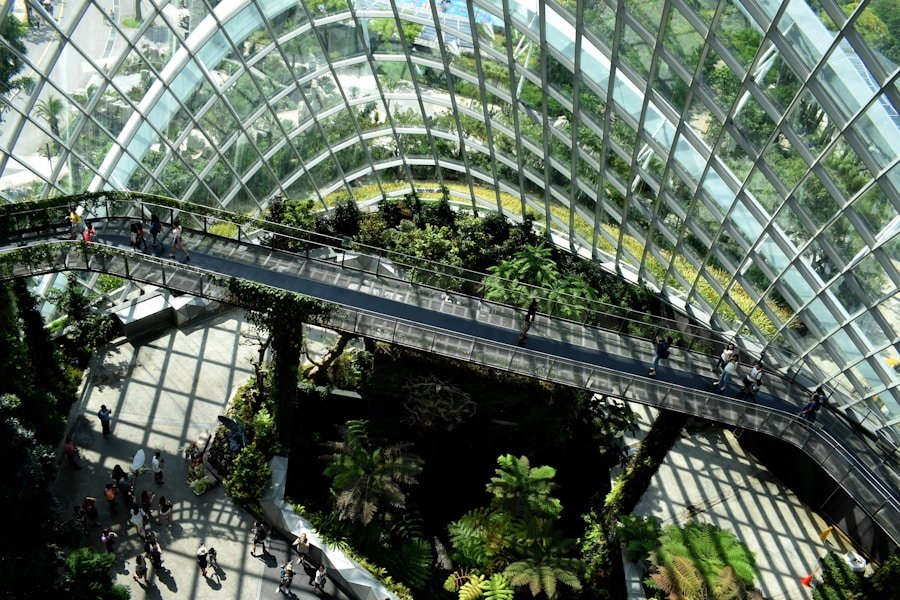
The concept of “From Waste to Wealth: The Power of Environmental Business Design” represents a paradigm shift in economic thought and industrial practice. This approach advocates for the integration of environmental considerations into the core design of business models and processes, moving beyond traditional end-of-pipe solutions. It reframes waste not as an unavoidable byproduct, but as an untapped resource, a valuable input for new products or processes. This perspective is gaining traction globally due to increasing resource scarcity, mounting environmental pressures, and a growing recognition of the economic benefits inherent in sustainable practices.
The Foundation of Environmental Business Design
Environmental business design is rooted in several core principles that differentiate it from conventional business practices. It necessitates a systemic viewpoint, urging businesses to consider the entire lifecycle of their products and services, from material extraction to disposal.
Circular Economy Principles
At its heart, environmental business design often embodies the principles of the circular economy. This model contrasts sharply with the linear “take-make-dispose” model prevalent in industrial societies. In a circular economy, resources are kept in use for as long as possible, extracting the maximum value from them whilst in use, then recovering and regenerating products and materials at the end of each service life. This involves:
- Design for Durability: Creating products that last longer and are easily repairable.
- Design for Disassembly: Manufacturing products that can be easily taken apart to recover components and materials.
- Material Cascading: Utilizing materials in subsequent applications after their initial use, often with decreasing quality requirements.
- Product-as-a-Service Models: Shifting from ownership of products to access, promoting reuse and maintenance by the manufacturer.
Life Cycle Thinking
A crucial element of environmental business design is the application of life cycle thinking. This involves a comprehensive assessment of the environmental impacts associated with a product, process, or service throughout its entire existence. This includes raw material extraction, manufacturing, distribution, use, and end-of-life management. By understanding these impacts, businesses can identify hotspots and design interventions to mitigate them. For example, a company producing electronics might discover that the greatest environmental burden lies in the mining of rare earth metals, prompting them to explore alternative materials or design for easier material recovery.
Business Models for Resource Optimization
The transition from waste to wealth is facilitated by innovative business models specifically engineered to optimize resource utilization and minimize environmental footprint. These models often challenge established norms and create new value propositions.
Industrial Symbiosis
Industrial symbiosis involves geographically proximate businesses collaborating to exchange materials, energy, water, and by-products. One company’s waste becomes another’s raw material, creating a localized circular economy. This concept mirrors natural ecosystems where nothing is truly wasted. For instance, a power plant’s waste heat might be used to warm greenhouses, or a cement factory could incorporate fly ash from a coal-fired power plant into its product. This collaboration leads to reduced waste disposal costs, lower raw material expenses, and decreased environmental impact for all participants.
Product-as-a-Service (PaaS)
The PaaS model shifts the focus from selling a product to providing a service. Instead of purchasing an item, customers lease it, and the manufacturer retains ownership and responsibility for its maintenance, repair, and eventual end-of-life management. This incentivizes manufacturers to design durable, upgradeable products, as they bear the cost of premature failure or disposal. Examples include companies leasing office furniture, industrial machinery, or even high-efficiency lighting systems. This model directly addresses waste generation by promoting longevity and facilitating controlled material recovery.
Upcycling and Valorization
Upcycling involves transforming discarded materials or products into items of higher quality or environmental value. This differs from traditional recycling, which often results in a downcycled product of lesser quality. Valorization, a broader term, encompasses any process that increases the value of a waste stream. Consider, for example, discarded shipping pallets being transformed into furniture or architectural elements, or food waste being converted into bio-energy or compost that enriches soil. These practices not only divert waste from landfills but also create new economic opportunities and products.
Enabling Technologies and Practices
The practical implementation of environmental business design relies heavily on advancements in technology and the adoption of specific operational practices. These tools serve as catalysts for resource efficiency and waste reduction.
Advanced Recycling Technologies
Traditional mechanical recycling has limitations; many complex products are difficult to separate into their constituent materials. Advanced recycling technologies, such as chemical recycling (which breaks down polymers into their basic monomers for remanufacture) or biological recycling (using microorganisms to decompose materials), are expanding the range of recoverable materials. These technologies are crucial for closing material loops that were previously considered intractable, such as mixed plastics or composite materials.
Digitalization and Data Analytics
Digital technologies play a pivotal role in optimizing resource flows. The Internet of Things (IoT) can monitor resource consumption in real-time, identifying inefficiencies and opportunities for reduction. Blockchain technology can enhance traceability of materials throughout supply chains, ensuring responsible sourcing and facilitating recovery. Data analytics allows businesses to model and predict waste generation, optimize logistics for material recovery, and identify market opportunities for recycled content. For instance, smart bins can signal when they are full, optimizing collection routes and reducing fuel consumption.
Eco-design and Material Innovation
Eco-design is a systematic approach that integrates environmental considerations into product design from the outset. This encompasses material selection, manufacturing processes, packaging, and end-of-life scenarios. The focus is on minimizing environmental impact throughout the product’s lifecycle. Alongside this, significant advancements in material science are providing alternatives to high-impact materials. Biodegradable plastics, bio-based composites, and self-healing materials are examples of innovations that align with the principles of environmental business design, offering paths to reduced resource dependency and environmental footprint.
Case Studies and Impact
Examining real-world examples illustrates the tangible benefits and potential of “From Waste to Wealth” initiatives. These examples demonstrate that environmental stewardship can coincide with economic prosperity.
Interface Inc.: A Pioneer in Circularity
Interface, a modular carpet tile manufacturer, stands as a prime example of a company embracing environmental business design. In the mid-1990s, they embarked on “Mission Zero,” an ambitious goal to eliminate their negative environmental impact by 2020. This involved significant initiatives:
- Closed-Loop Recycling: They developed processes to recycle old carpet tiles into new ones, significantly reducing demand for virgin materials. Their “ReEntry” program collects used carpet tiles, including competitors’ products, for recycling.
- Bio-based Materials: They incorporated bio-based and recycled content into their products, replacing petroleum-derived materials.
- Product-as-a-Service: While not their primary model, they explored leasing options for their carpets, aligning with the PaaS concept.
Interface achieved remarkable results, including significant reductions in greenhouse gas emissions, waste to landfill, and water consumption, while simultaneously experiencing sustained financial growth. This demonstrates that deep environmental commitment can be a driver of innovation and shareholder value.
Caterpillar Remanufacturing
Caterpillar, a manufacturer of heavy equipment, operates a successful remanufacturing business. They take used components from engines, transmissions, and other machinery, disassemble them, clean and inspect the parts, replace worn elements, and reassemble them to “like new” specifications at a fraction of the cost and energy required to produce new components. This extends the life of valuable materials, reduces waste, and offers customers a more affordable option with a full warranty. This strategy not only generates significant revenue but also enhances brand loyalty and minimizes environmental impact.
Challenges and Future Outlook
| Metrics | Data |
|---|---|
| Number of businesses featured | 15 |
| Environmental impact | Reduced waste by 30% |
| Revenue generated | 1.5 million |
| Jobs created | 50 |
While the promise of “From Waste to Wealth” is substantial, its widespread adoption faces hurdles. Understanding these challenges is crucial for charting a path forward.
Regulatory and Policy Frameworks
Existing regulatory frameworks are often designed for a linear economy, posing challenges for circular business models. Policies may inadvertently create barriers to material recovery, inter-company waste exchange, or the use of recycled content. For example, differing regulations across jurisdictions for classifying “waste” versus “resource” can hinder cross-border material flows. Future policy will need to evolve to incentivize circularity, perhaps through extended producer responsibility (EPR) schemes that hold manufacturers accountable for the entire lifecycle of their products, or through tax incentives for businesses adopting circular practices.
Consumer Behavior and Acceptance
Consumer perception and willingness to accept “recycled” or “remanufactured” products can be a significant barrier. There can be a stigma associated with products not made from virgin materials, even if their quality is comparable or superior. Educating consumers about the benefits of circular products and shifting cultural norms around consumption and ownership are vital. Marketing strategies that highlight the environmental benefits and economic value of these products will be essential.
Financial and Investment Landscape
The initial investment required to transition to circular business models can be substantial, particularly for small and medium-sized enterprises (SMEs). Traditional financial institutions may also be reluctant to fund projects that deviate significantly from established linear models, perceiving higher risk. Developing innovative financial instruments, such as green bonds or impact investing funds, targeted at circular economy initiatives, can help unlock necessary capital. Governments may also need to provide grants or subsidies to de-risk pioneering efforts.
In conclusion, “From Waste to Wealth: The Power of Environmental Business Design” is not merely an idealistic concept but a pragmatic and increasingly necessary approach to economic development. It offers a powerful framework for businesses to enhance their competitiveness, mitigate environmental risks, and unlock new value by transforming what was once seen as an unusable burden into a valuable resource. As resource constraints tighten and environmental pressures intensify, the principles and practices outlined herein will likely become central to sustainable economic activity. By embracing these principles, businesses can contribute to a more resilient, resource-efficient, and prosperous future, demonstrating that economic growth and environmental stewardship are not mutually exclusive, but rather intrinsically linked.