
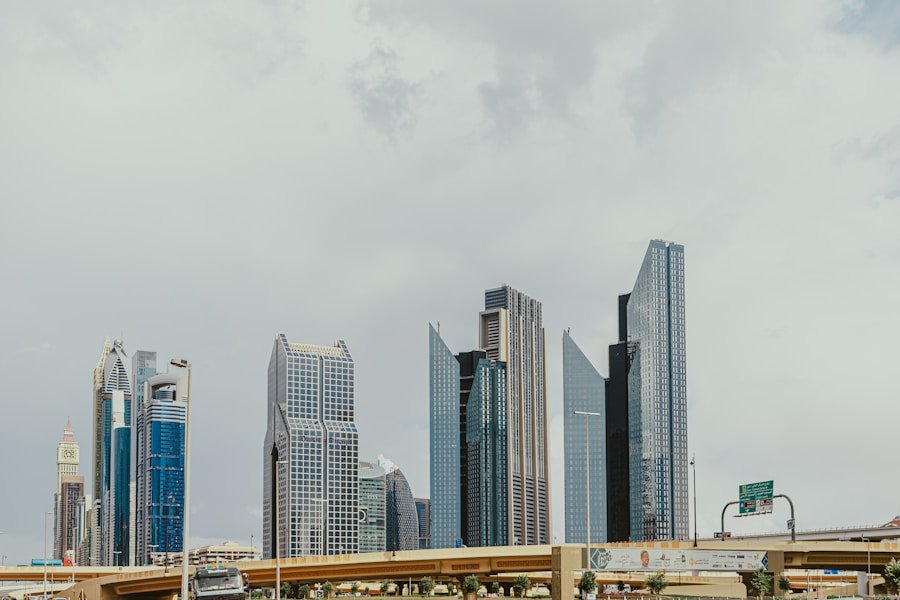
Dubai initiated smart city development to address rapid urbanization and diversify its economy beyond oil. These projects integrate technology into urban infrastructure to enhance efficiency, sustainability, and quality of life. The emirate positions itself as a global leader in smart urban innovation, aiming to set benchmarks for future city planning.
Genesis and Vision: Laying the Foundation for Smart Urbanism
Dubai’s smart city ambitions are rooted in its strategic plan to become a knowledge-based economy and a global hub for innovation. The government, led by Sheikh Mohammed bin Rashid Al Maktoum, envisioned urban spaces that not only accommodate growth but actively contribute to environmental stewardship and economic resilience. This vision transcends mere technological integration, aiming for a holistic transformation of the urban experience.
Government Initiatives and Policy Frameworks
The Dubai government has established numerous initiatives to propel smart city development. The “Smart Dubai” initiative, launched in 2014, serves as the overarching framework, coordinating efforts across various government entities. Its primary objective is to make Dubai the “happiest city on Earth” by leveraging technology to deliver seamless, impactful, and safe city experiences. This involves implementing a wide array of digital services and platforms.
Further supporting this, the “Dubai Plan 2021” outlines key urban development goals, emphasizing sustainability, a connected city, and a happy and creative population. These plans are not advisory; they are integrated into legal and administrative structures, providing a robust policy environment for smart city projects. Regulatory bodies and task forces are established to ensure compliance and progress, with clear metrics for success.
Early Adopters and Pilot Projects
Prior to large-scale developments, Dubai experimented with various pilot projects to test the feasibility and impact of smart technologies. These early initiatives often focused on specific urban challenges, such as traffic management or energy consumption in public buildings. Examples include intelligent transportation systems that optimize traffic flow and smart metering programs that monitor and reduce utility usage. These projects served as crucial learning grounds, informing subsequent, more ambitious undertakings and allowing for iterative improvements in technological deployment and urban planning strategies. The insights gained from these smaller-scale applications proved invaluable in scaling up.
Sustainable Infrastructure and Green Technologies
The emphasis on sustainability in Dubai’s smart cities is a cornerstone of their design. Recognizing the region’s environmental challenges, such as aridity and high energy demand, these projects integrate advanced green technologies and sustainable infrastructure practices. The objective is to mitigate environmental impact while improving resource efficiency.
Renewable Energy Integration
Dubai’s smart cities are making significant strides in incorporating renewable energy sources. The Mohammed bin Rashid Al Maktoum Solar Park, a key component of Dubai’s clean energy strategy, is a major source of solar power that can be integrated into the grid supporting these urban developments. Within the smart city developments themselves, distributed renewable energy generation, such as rooftop solar panels on residential and commercial buildings, is becoming increasingly common. These systems reduce reliance on fossil fuels, decrease carbon emissions, and contribute to energy independence. The goal is to achieve a substantial reduction in the carbon footprint of these urban centers, promoting a cleaner energy mix.
Water Conservation and Waste Management
Given the scarcity of water in the region, sophisticated water conservation technologies are integral to smart city planning. This includes advanced wastewater treatment and recycling systems, smart irrigation networks that optimize water usage for landscaping, and stormwater management solutions that capture and reuse precipitation. Desalination plants, while energy-intensive, are being made more efficient with renewable energy integration.
Waste management strategies are equally advanced, focusing on reducing landfill waste and promoting a circular economy. Smart waste bins that monitor fill levels and optimize collection routes are deployed. Comprehensive recycling programs are implemented, and waste-to-energy facilities are being explored to convert non-recyclable waste into usable power, thus completing a resource loop. These initiatives aim to minimize ecological impact and maximize resource recovery.
Green Building Standards and Urban Planning
Smart cities in Dubai adhere to stringent green building codes and urban planning principles. These standards mandate energy-efficient building designs, the use of sustainable materials, and the incorporation of green spaces. Buildings are designed to maximize natural light and ventilation, reducing the need for artificial lighting and air conditioning. Rooftop gardens and vertical farms are increasingly common, contributing to urban biodiversity and localized food production. Urban planning prioritizes walkability and public transportation, reducing reliance on private vehicles and mitigating urban heat island effects through strategic landscaping and material choices. This integrated approach creates more resilient and environmentally conscious urban environments.
Connectivity and Digital Transformation
At the core of Dubai’s smart cities is a robust digital infrastructure that facilitates seamless connectivity and widespread digital transformation. This infrastructure acts as the nervous system of the city, enabling real-time data exchange and intelligent decision-making.
IoT and Sensor Networks
The pervasive deployment of the Internet of Things (IoT) devices and sensor networks is fundamental to the functionality of these smart urban environments. These devices collect vast amounts of data on various aspects of city life, from environmental conditions (air quality, temperature) to infrastructure performance (traffic flow, utility consumption) and public safety. This data forms the basis for informed urban management.
For example, smart streetlights equipped with sensors can adjust illumination based on ambient light and pedestrian presence, conserving energy. Similarly, waste bins communicate their fill levels, optimizing collection routes and reducing operational costs. The sheer volume of data generated by these networks provides a comprehensive, granular view of the city’s operational dynamics.
5G and Advanced Communication Infrastructure
The rollout of 5G networks is a critical enabler for Dubai’s smart cities. This high-speed, low-latency communication technology supports the massive data transfer required by IoT devices, autonomous vehicles, and real-time city management systems. It provides the backbone for seamless connectivity, ensuring that data can be transmitted and processed without delay.
Beyond 5G, advanced fiber-optic networks form the foundational communication infrastructure, delivering high-bandwidth connectivity to homes, businesses, and public services. This robust infrastructure minimizes digital divides and ensures that all urban components are interconnected and responsive. The reliability and speed of this network are paramount for the functioning of interconnected smart systems.
Smart Governance and Digital Services
Smart governance initiatives leverage digital technologies to enhance public service delivery and citizen engagement. Government services are increasingly provided through digital platforms, accessible via mobile applications and online portals. This streamlines administrative processes, reduces bureaucratic hurdles, and improves accessibility for residents and businesses.
Digital identity systems, blockchain-based registries, and AI-powered chatbots are examples of technologies enhancing efficiency and transparency in governance. These tools aim to create a more responsive, transparent, and user-friendly interaction between citizens and their government, fostering a more engaging and efficient urban experience. The ultimate goal is a truly citizen-centric governmental approach.
Economic Diversification and Innovation Hubs
Dubai’s smart cities are not just about technology; they are also strategic engines for economic diversification and innovation. By creating ecosystems that foster technological advancement, entrepreneurship, and specialized industries, these cities aim to reduce reliance on traditional economic sectors.
Attracting FDI and Talent
The development of smart cities positions Dubai as an attractive destination for foreign direct investment (FDI) and global talent. The state-of-the-art infrastructure, advanced technological capabilities, and strategic government support signal a conducive environment for businesses and professionals in high-tech sectors. Special economic zones and free zones within these smart cities offer incentives such as tax breaks, full foreign ownership, and streamlined regulations, further drawing international companies and skilled workers. This influx of capital and human expertise is critical for sustaining an innovation-driven economy.
Research and Development (R&D) Initiatives
To foster a culture of innovation, Dubai’s smart cities actively promote research and development. Partnerships between government, academia, and industry are encouraged to drive technological breakthroughs and address urban challenges. Dedicated research institutions and innovation labs are established within these urban developments, focusing on areas like artificial intelligence, big data analytics, sustainable technologies, and advanced robotics. These R&D initiatives are not abstract; they are directed towards tangible applications that can improve urban functionality and generate new economic opportunities.
Startup Ecosystems and Entrepreneurship
Smart cities in Dubai are intentionally designed to nurture robust startup ecosystems and promote entrepreneurship. Incubators, accelerators, and co-working spaces provide essential resources and mentorship for aspiring entrepreneurs. Government-backed funds and venture capital firms are established to provide financing for innovative startups. The aim is to create a dynamic environment where new ideas can flourish, translating technological advancements into commercial successes. This emphasis on entrepreneurship is a cornerstone of Dubai’s strategy to cultivate a resilient, diversified, and high-growth economy.
Challenges and Future Outlook
| City | Population | Green Spaces | Solar Energy Usage |
|---|---|---|---|
| Dubai | 3.3 million | Over 50% | 25% of energy needs |
While Dubai’s smart cities represent a significant leap in urban development, they also face inherent challenges. Addressing these challenges is crucial for their long-term success and continued evolution.
Data Privacy and Cybersecurity Concerns
The extensive use of IoT devices and sensor networks generates immense volumes of data, raising critical concerns about data privacy and cybersecurity. Protecting sensitive citizen data from breaches and misuse is a paramount challenge. Robust regulatory frameworks, advanced encryption techniques, and continuous cybersecurity audits are essential to build and maintain public trust. The sheer scale of interconnected systems makes them potential targets, demanding constant vigilance and adaptive security protocols. Balancing data utility with individual privacy is a perpetual negotiation in these digitally dense environments.
Social Equity and Digital Inclusion
The rapid pace of technological advancement in smart cities can exacerbate existing social inequalities if not carefully managed. Ensuring that all segments of the population have access to and benefit from smart city services is a challenge. This includes providing digital literacy programs, ensuring affordable access to technology, and designing inclusive digital platforms. The risk is creating a digital divide where certain populations are left behind due to a lack of access or understanding. Future smart city developments must therefore prioritize social equity and digital inclusion, ensuring technology serves all residents, not just a privileged few.
Infrastructure Scalability and Maintenance
The maintenance and scalability of complex smart city infrastructure present ongoing operational challenges. As cities grow and technologies evolve, ensuring that systems remain effective, interoperable, and cost-efficient requires significant investment and strategic planning. The lifecycle of technological components is often shorter than traditional infrastructure, necessitating regular upgrades and replacements. Furthermore, integrating new technologies with existing legacy systems can be complex and resource-intensive. Effective asset management and comprehensive maintenance schedules are crucial to prevent obsolescence and functional decay, ensuring the long-term viability of these intricate urban systems.
Global Benchmarking and Knowledge Exchange
Dubai’s smart cities are not isolated endeavors. They operate within a global context, providing and receiving insights from other urban innovation centers. Engaging in knowledge exchange and benchmarking against international best practices helps refine strategies and identify areas for improvement. This involves participating in global forums, collaborating on research projects, and sharing lessons learned with other cities striving for similar goals. The future outlook involves continuous learning, adaptation, and a commitment to incremental improvement, ensuring that Dubai’s smart cities remain at the forefront of urban innovation and sustainability. The journey of urban development is a continuous loop of learning and application.